
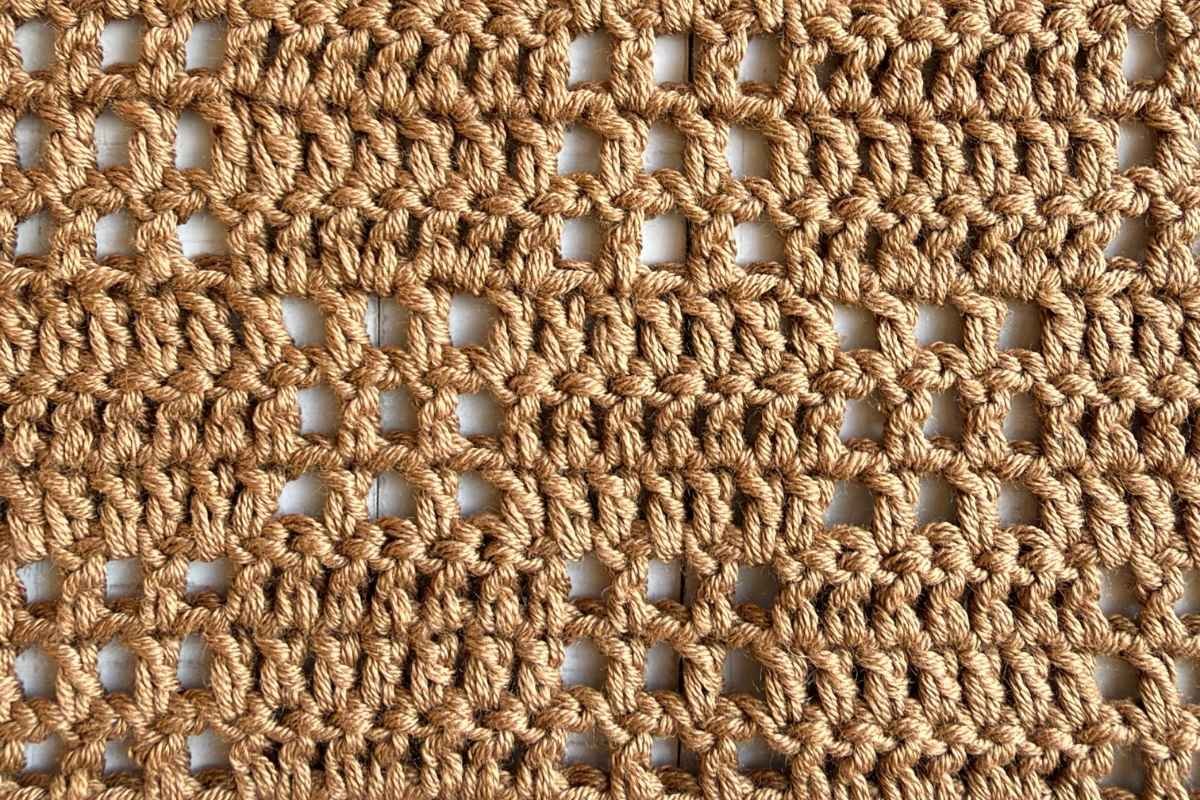
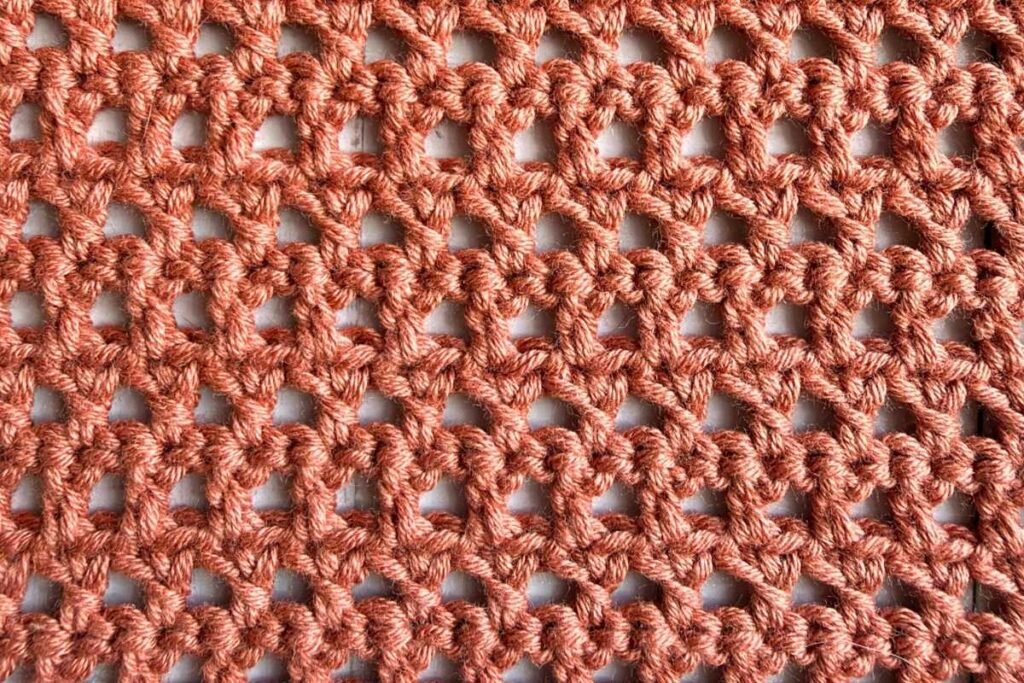
The crochet Filet Squares Stitch is a simple geometric pattern that combines solid sections of double crochet with open chain spaces. The filled and empty areas alternate across the fabric producing a clean checkerboard style design with plenty of drape and openness.
This is also a great stitch for learning the basics of filet crochet. Rather than relying on complicated stitches, filet crochet creates its designs by changing between solid and open sections of a regular mesh. Once you understand how those two sections work together, it’s much easier to move on to more detailed filet charts and motifs.
About the Crochet Filet Squares Stitch
The word filet comes from the French word for net, which is a good description of the grid-like fabric created with this technique.
Traditional filet crochet uses a combination of solid and empty squares. The open sections are created with chain spaces and skipped stitches, while solid areas are filled with double crochet stitches. By arranging these blocks in different ways you can create anything from simple geometric patterns to much more elaborate motifs, lettering and pictures.
Crochet Filet Squares at a Glance
- Skill level: Easy
- Stitch multiple: 12 + 3
- Main stitches: Chain and double crochet
- Technique: Filet crochet
- Fabric: Open mesh and solid sections
- Pattern repeat: 6 rows
Abbreviations
- ch – chain
- dc – double crochet
- sp – space
- sk – skip
- st(s) – stitch(es)
- rep – repeat
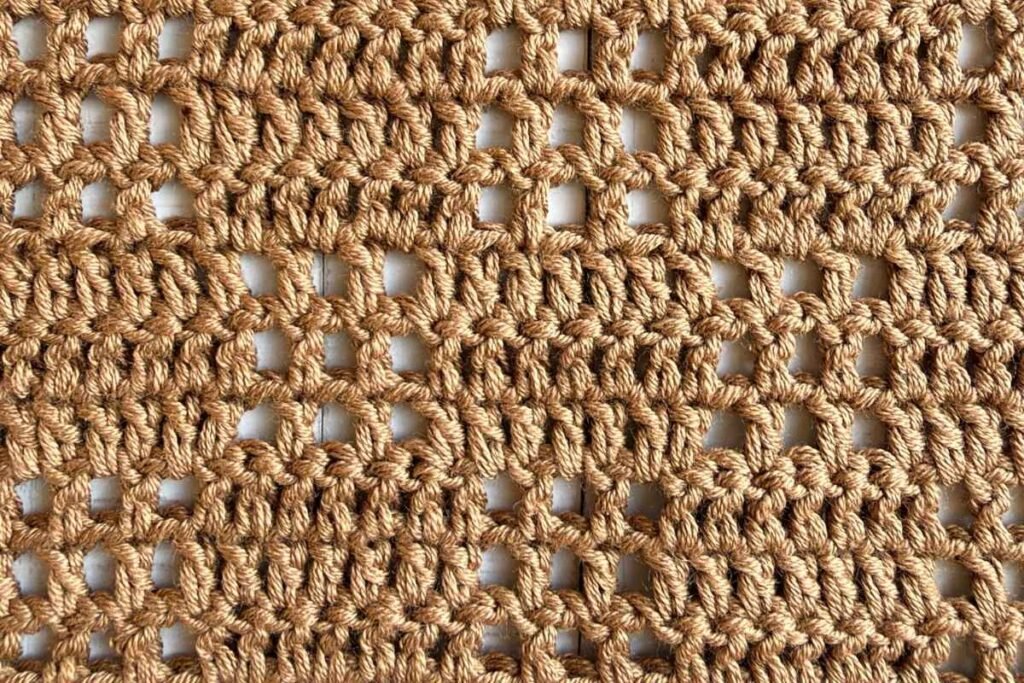
How to Crochet the Filet Square Stitch
Begin with a foundation chain in multiples of 12 + 3
Row 1:
Work a dc in the 4th ch from the hook, dc in each of the next 5 ch, (ch 1, sk 1, dc in next ch) 3 times, *dc in each of the next 6 ch, (ch 1, sk 1, dc in next ch) 3 times, rep from * across. Turn.
Row 2:
Ch 4, dc in next dc, (ch 1, sk 1, dc in next st) twice, dc in each of the next 6 sts, *(ch 1, sk 1, dc in next st) 3 times, dc in each of the next 6 sts, rep from * across ending with a dc in the turning ch. Turn.
Row 3:
Ch 3, *dc in each of the next 6 dc, (ch 1, sk 1, dc in next st) 3 times, rep from * across, ending with a dc in the 3rd ch of the turning ch. Turn.
Row 4:
Ch 3, *(dc in the ch-1 sp, dc in next dc) 3 times, (ch 1, sk 1, dc in next st) 3 times, rep from * across ending with a dc in the turning ch. Turn.
Row 5:
Ch 4, dc in next dc, (ch 1, sk 1, dc in next st) twice, dc in each of the next 6 sts, *(ch 1, sk 1, dc in next st) 3 times, dc in each of the next 6 sts, rep from * across ending with a dc in the turning ch. Turn.
Row 6:
Ch 3, *dc in each of the next 6 dc, (ch 1, sk 1, dc in next st) 3 times, rep from * across ending with a dc in the 3rd ch of the turning ch. Turn.
Row 7:
Ch 3. *(dc in the ch-1 sp, dc in next dc) 3 times, (ch 1, sk 1, dc in next st) 3 times, rep from * across ending with a dc in the turning ch. Turn.
Repeat:
Rep rows 2-7 for the stitch pattern.
Is the Filet Square Stitch Beginner Friendly?
Yes. I’d rate this one easy, especially for someone who already knows how to make a double crochet. There aren’t any special stitches to learn. The challenge is mostly about counting accurately and keeping track of whether you’re working a solid section or an open section.
That actually makes Filet Squares a very good introduction to filet crochet before tackling charts or more complicated filet stitches.
Always check your tension as you go along. Tight chain stitches can make the open sections narrower than the solid sections, while missed stitches can gradually shift the entire design.
As you move on to other filet stitches it would be helpful to follow a chart. They provide a visual representation of where the solid and empty areas should sit. Crochet charts may seem utterly daunting but when it comes to the filet stitch world, they can really help.
Explore More Crochet Stitches
Love Discovering New Crochet Stitches?
Get new free crochet stitch patterns and tutorials delivered straight to your inbox.